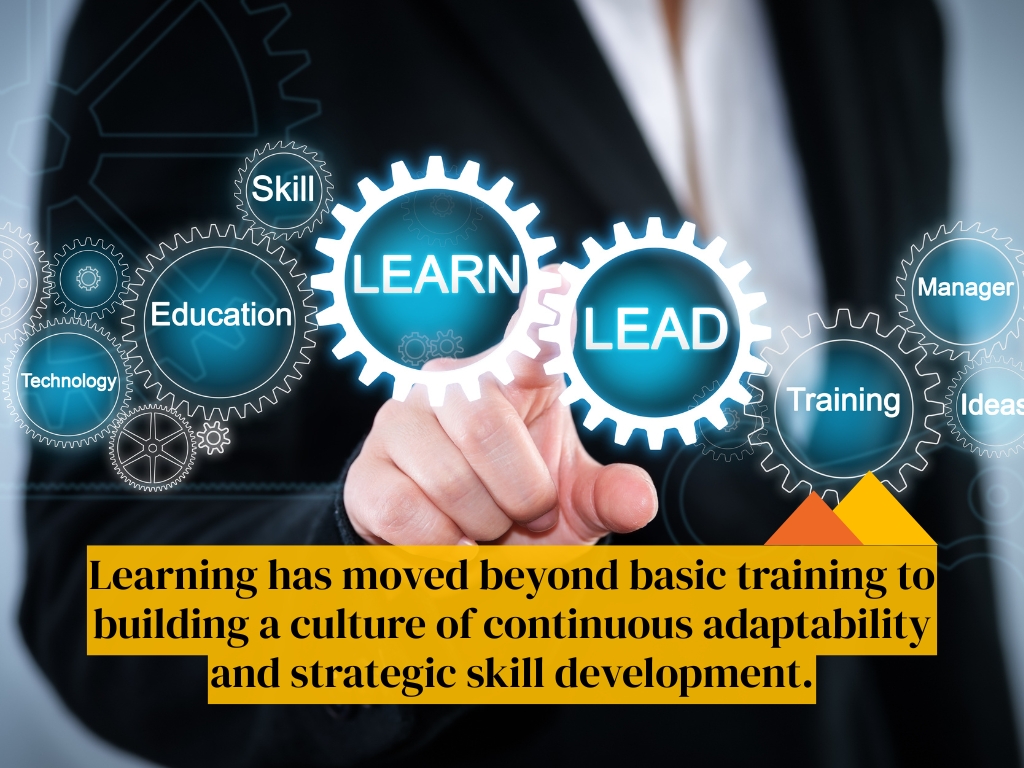
The general upskilling/continued learning needs are larger than ever before. And looking further into Learning and Development (L&D), one may want to enhance employees’ knowledge, skills, and abilities further, in order to improve job performance and overall business success. A range of such activities and programmes are aimed at fostering employee growth. By focusing on foundational skills and behavioural alignment, organisations can significantly increase talent density – the collective strength, readiness, and potential of their workforce.
For instance, there is a programme as a pathway for leadership transition. This is a strategic journey that equips your high-potential talent for the next level. This program transforms individual contributors into confident, effective leaders, emphasizing the critical soft skills often missed in conventional training.
Structured Learning includes a defined learning path, which provides a structured roadmap outlining the progression of learning activities over time, and multiple interventions utilising various learning methods. Examples of these are workshops, e-learning modules, mentoring, and hands-on practice to reinforce learning.
The ‘Reverse-Mentorship’ Programme is another opportunity, which pairs frontline employees with managers in a structured learning relationship. Here the employee becomes the expert and the manager the learner. This transformative experience celebrates new capabilities, strengthens innovation from the ground up, and serves as a strategic investment in the future of your leadership.
Learning needs within AI are also in high demand, accelerated by the roll-out of such market-ready solutions that are transforming how people work. Adoption of AI tools across most organisations however lags behind. In this context, successful organisations reward employees for demonstrating new competencies, sharing insights with colleagues, and helping others navigate the learning curve. Social recognition often proves more powerful than financial rewards do. When respected team leaders share their AI learning journeys and publicly acknowledge that they’re still learning, it reduces the psychological barriers for everyone else.
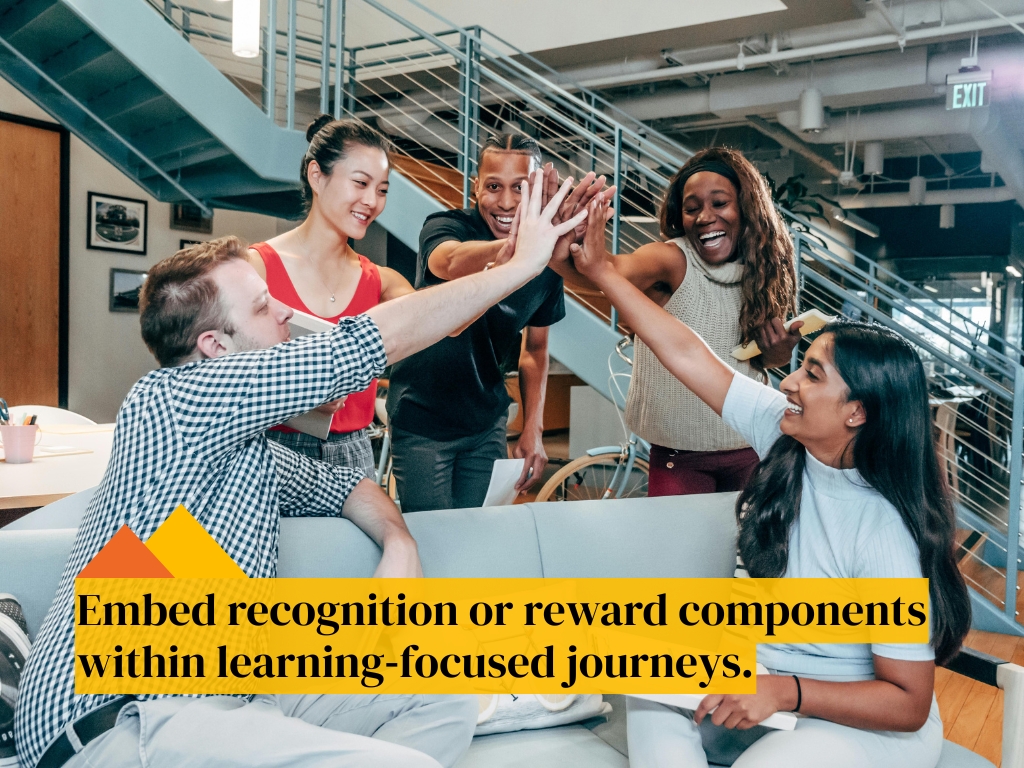
Furthermore, businesses may consider Peer Group Learning experienced, where individuals with common characteristics work together to share knowledge, skills, and perspectives, leading to deeper understanding and improved skills. To prepare for real world scenarios, these experiences foster higher-level thinking, develop essential soft skills like communication and leadership, increase self-esteem, and promote collaboration and engagement. Common examples include study groups, collaborative projects, peer tutoring, and online forums, applicable in both educational and professional settings.
It can be highlighted that collaborative training emphasizes social interaction, allowing employees to teach and learn from one another’s diverse skills and experiences. This method enhances engagement, knowledge retention, and team performance by leveraging group dynamics to achieve common learning goals.
Articulating concepts to peers reinforces one’s own knowledge and helps solidify understanding. It also benefits increased Retention and Engagement: Active and social learning experiences are more engaging, leading to better retention and a stronger sense of community. Positive peer interactions can boost self-esteem, nurture a sense of belonging, and contribute to overall well-being.